
EV Ownership in 2026: Maintenance, Costs, Charging & Real Economics (USA Guide)
A detailed 2026 guide to EV ownership in the USA covering maintenance, charging costs, electricity pricing, battery degradation, and real-world operating economics compared to gasoline vehicles.
- EV
- electric vehicles
- EV ownership
- EV maintenance
- EV charging cost
- EV vs gas cost
- battery degradation
- EV economics
- EV efficiency
- TOU electricity
- EV infrastructure
- home charging EV
- public charging EV
- EV cost analysis
- electric vehicle USA
- EV charging USA 2026
- EV maintenance cost
- EV savings
- battery life EV
- electric car cost breakdown
EV Ownership in 2026: Maintenance, Energy Costs, Charging Strategy, and Real-World Economics (USA Guide)
27.06.2026
Introduction
Electric vehicles (EVs) are no longer a niche technology in the United States. In 2026, they represent a rapidly expanding share of new car sales, driven by falling battery costs, expanding charging infrastructure, and federal and state incentives.
However, EV ownership is not just a fuel substitution. It changes how drivers think about maintenance, electricity pricing, charging behavior, and long-term operating costs. While EVs eliminate many internal combustion components, they introduce new dependencies related to batteries, software systems, charging cycles, and grid infrastructure.
This guide explains what EV ownership actually looks like in 2026: real maintenance requirements, charging costs, energy efficiency, and the economic trade-offs most owners underestimate.
Quick Cost Comparison: EV vs Gas Vehicle (USA 2026)
| Category | EV (Electric Vehicle) | Gasoline Vehicle |
|---|---|---|
| Fuel cost per mile | $0.03–$0.06 | $0.10–$0.18 |
| Maintenance cost per year | $300–$800 | $900–$1,800 |
| Oil changes | Not required | Required every 5,000–10,000 miles |
| Brake wear | Reduced (regen braking) | Standard wear |
| Energy source | Electricity | Gasoline |
Key point: EVs are cheaper to operate, but savings depend heavily on electricity pricing and charging behavior.
Case Study: Urban EV Ownership Scenario (USA)
Vehicle: Mid-range EV (75 kWh battery)
Annual mileage: 12,000 miles
Charging mix: 80% home, 20% public fast charging
Electricity cost: $0.28/kWh blended average
Energy consumption
Average efficiency: 3.5 miles per kWh
12,000 miles / 3.5 = 3,428 kWh per year
Annual cost
3,428 kWh × $0.28 = $960 per year
Gas comparison
30 MPG gasoline vehicle
12,000 miles = 400 gallons
Gas price = $3.80/gallon
400 × 3.80 = $1,520 per year
Result: EV saves approximately $560 per year in this scenario, but savings decrease significantly with heavy fast charging usage.
EV Maintenance: What Actually Breaks and What Doesn’t
EVs remove many traditional mechanical systems, but they are not maintenance-free.
Not required:
- Oil changes
- Exhaust system maintenance
- Transmission servicing (traditional ICE type)
- Fuel system maintenance
Required:
- Tire replacement (often faster wear due to torque)
- Brake service (reduced frequency but still necessary)
- Coolant system checks (battery thermal management)
- Suspension wear components
- Software and firmware updates
Key point: EV maintenance is lower frequency but higher specialization.
Battery Health and Degradation Science
Battery degradation depends on usage patterns, heat exposure, and charging behavior.
Typical degradation:
- Years 1–3: 2–5% capacity loss
- Years 4–8: 8–15% total loss
- After 10 years: 15–30% depending on conditions
Primary degradation drivers:
- Frequent fast charging
- High temperature operation
- Long periods at 100% charge
Charging Infrastructure in the USA
Charging network types:
- Level 1 (standard outlet)
- Level 2 (home and public charging)
- DC fast charging
Key limitations:
- uneven rural coverage
- limited apartment charging access
- congestion at fast charging stations during peak hours
Electricity Pricing and Time-of-Use (TOU)
Time-of-use pricing significantly affects EV operating costs.
Example:
Peak hours: $0.35/kWh
Off-peak hours: $0.08/kWh
Same 60 kWh session:
- Peak: $21
- Off-peak: $4.80
Result: over 4x cost difference depending on charging timing.
Home Charging vs Public Charging Economics
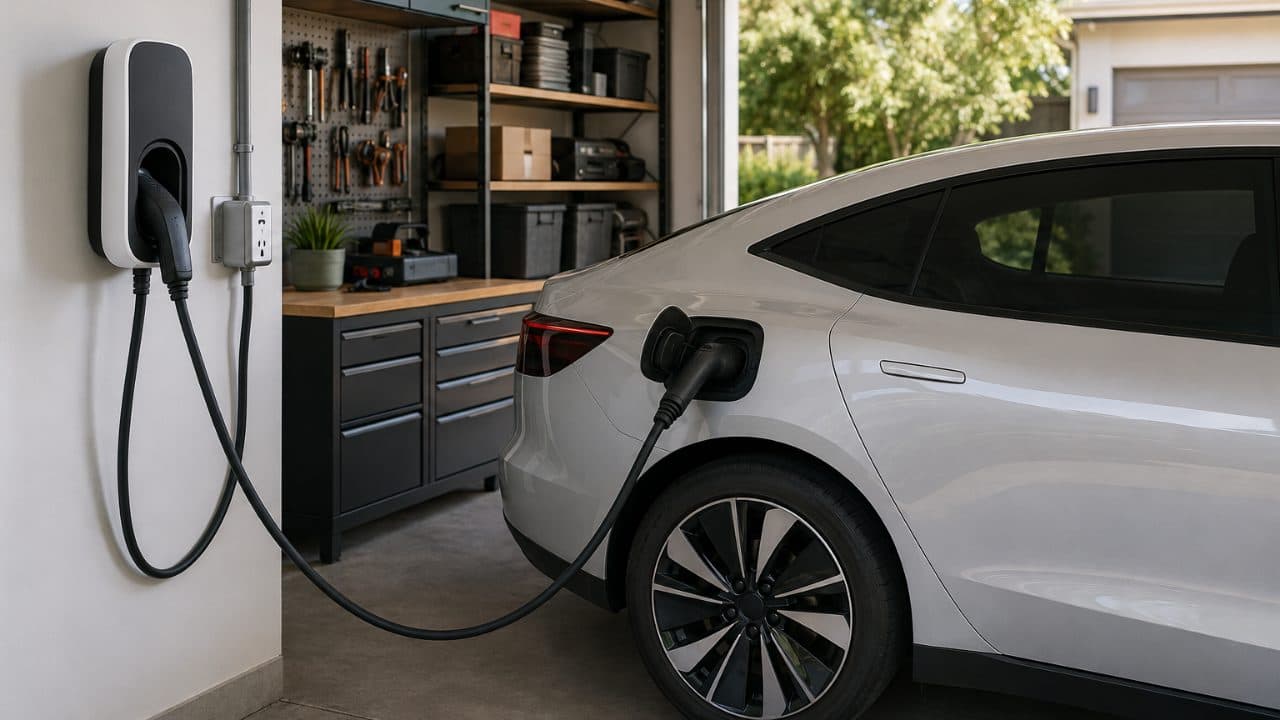
Home charging:
- lowest cost
- predictable pricing
- overnight convenience
Public fast charging:
- 2–5x more expensive
- variable pricing
- convenience-focused
EV Energy Efficiency (kWh per mile)
| Condition | Efficiency |
|---|---|
| City driving | 4–5 mi/kWh |
| Highway | 2.5–3.5 mi/kWh |
| Winter | -20–30% efficiency loss |
Hidden Costs of EV Ownership
- home charger installation ($800–$2,000)
- higher tire wear
- insurance premiums (often higher in some states)
- battery degradation risk over time
- fast charging price premiums
Maintenance Strategy for Long EV Lifespan
- avoid daily 100% charging
- keep battery between 20–80%
- minimize fast charging frequency
- avoid prolonged heat exposure
- rotate tires regularly
Case Study: Suburban Household Transition
Household:
- 2 vehicles (1 EV + 1 gas)
- 18,000 miles annual total
- partial solar integration
Result:
- 70% mileage covered by EV
- ~40% total transport cost reduction
- lower peak grid dependency through off-peak charging
Environmental and Grid Impact
EV adoption shifts emissions from tailpipe to electricity generation.
Key effects:
- higher peak electricity demand
- need for grid modernization
- increased importance of renewable integration
However:
- lifecycle emissions still lower than ICE in most US regions
- efficiency advantage remains significant
FAQ
Are EVs cheaper than gas cars?
Yes, but savings depend on electricity pricing and charging behavior.
How long do EV batteries last?
Typically 10–15 years depending on usage and climate.
Is fast charging bad for the battery?
Frequent fast charging increases degradation rate slightly.
What is the biggest hidden cost?
Electricity pricing variability and home charging installation.
Conclusion
EV ownership in 2026 is economically favorable in many scenarios, but not automatically. Real savings depend on charging discipline, electricity pricing, climate, and infrastructure access.
The key advantage is not just lower fuel cost, but overall system efficiency and reduced maintenance complexity compared to internal combustion vehicles.
Related reading
 Will Electric Cars Still Be Worth It in 2027? Cost Breakdown vs Gasoline
A full cost breakdown of electric cars vs gasoline in 2027. Compare charging costs, fuel prices, maintenance, depreciation, and total ownership costs to see if EVs are still worth it.
 EV Home Charging Costs in the US (2026) | Complete Cost Guide
Learn how much it costs to charge an electric vehicle at home in the US in 2026. Compare charging levels, electricity rates, annual costs, and real-world savings scenarios.
 Best Home Insulation Upgrades for Maximum Energy Savings (2026)
Discover the best home insulation upgrades in 2026 that cut heating and cooling costs, improve comfort, and deliver the fastest ROI across different US climate zones.