
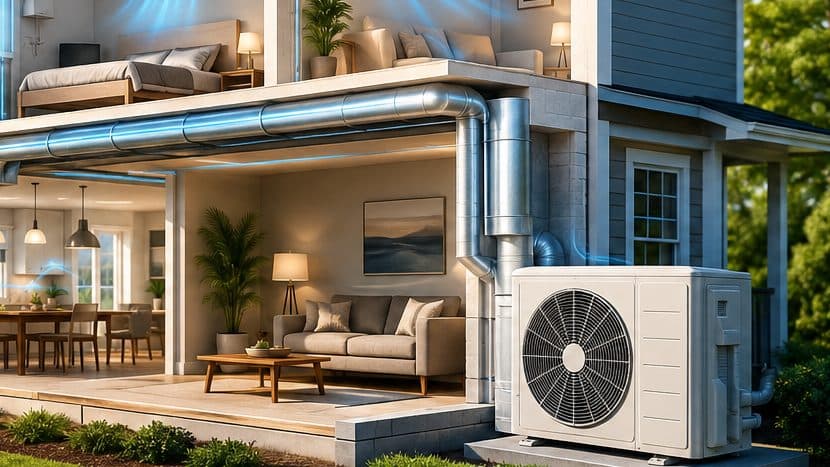
Air Conditioning in the United States: The Complete Homeowner Guide (2026)
Complete 2026 guide to air conditioning in the United States. Learn how AC systems work, how to size them correctly, installation basics, costs, SEER ratings, and how to avoid expensive sizing mistakes.
- air conditioning
- HVAC
- AC sizing
- BTU calculator
- SEER rating
- central air
- mini split
- heat pump
- cooling costs
- home cooling
- HVAC guide
- US HVAC 2026
Air Conditioning in the United States: The Complete Homeowner Guide (2026)
24.06.2026
Introduction
Buying or replacing an air conditioning system in the United States is one of the most important comfort and energy decisions a homeowner will make.
Most people approach it incorrectly:
- they rely only on square footage
- they trust installer recommendations without verification
- they underestimate climate impact
- they ignore insulation and airflow factors
The result is often oversized systems, higher electricity bills, and poor humidity control.
In 2026, correct sizing matters more than ever.
How Air Conditioning Actually Works
Air conditioning does not create cold air. It removes heat from indoor air and transfers it outside using refrigerant.
The cooling cycle:
- Indoor air passes over evaporator coils
- Heat is absorbed by refrigerant
- Refrigerant is compressed and moved outside
- Heat is released through condenser unit
- Cycle repeats continuously
Humidity removal
AC systems also remove moisture from the air. This is critical because:
- humidity affects comfort more than temperature alone
- high humidity makes rooms feel warmer
- proper dehumidification depends on correct system sizing
Oversized systems often cool too fast and fail to remove enough moisture.
Types of Air Conditioning Systems in the US
Central Air Conditioning
Uses ductwork to cool entire homes.
Ductless Mini Splits
Zoned cooling without ducts.
Heat Pumps
Provide both heating and cooling.
Window Units
Single-room cooling systems.
Portable AC Units
Mobile but least efficient option.
How to Choose the Right AC Size
AC capacity is measured in BTUs or tons.
- 1 ton = 12,000 BTU/hour
Typical ranges:
- 2 ton → small homes
- 3 ton → average homes
- 4–5 ton → large homes
Square footage alone is not enough.
Why Home Size Is Not Enough
Two homes of the same size can have completely different cooling needs.
Example:
Texas:
- extreme heat
- high humidity
- high solar load
Minnesota:
- moderate summers
- better insulation
Same size, different demand.
Climate Zones in the United States
Florida
High humidity, long cooling season
Texas
Extreme heat and long runtime
Arizona
Dry but intense heat
California
Mixed climate zones
How AC Sizing Actually Works (BTU Explained)
BTU measures heat removal capacity.
Real sizing depends on:
- insulation
- windows
- ceiling height
- air leakage
- sun exposure
- occupancy
Rule-of-thumb sizing can be off by 30–50%.
Where Should an Air Conditioner Be Installed?
Outdoor Unit
Needs airflow, shade, and clearance.
Indoor Unit
Should maximize airflow and avoid direct obstruction.
How Much Does Air Conditioning Cost to Run?
Depends on:
- system size
- SEER rating
- electricity price
- climate
What SEER Ratings Mean
SEER measures efficiency.
Higher SEER = lower energy use, higher upfront cost.
What You Need Besides the AC Unit
- thermostat
- electrical system
- ductwork (if central AC)
- drainage
- air filtration
Common AC Installation Mistakes
- oversizing
- undersizing
- ignoring insulation
- poor installation quality
Maintenance and Lifespan
- central AC: 12–17 years
- mini splits: 15–20 years
- heat pumps: 12–18 years
When a Heat Pump Might Be Better Than AC
Best when:
- moderate winters
- need heating + cooling
- efficiency is priority
Estimating Your Cooling Needs
Correct sizing is critical to avoid:
- wasted energy
- poor comfort
- overspending
Conclusion
Correct sizing matters more than brand or price.
A properly designed system ensures:
- lower bills
- better comfort
- longer lifespan
Related reading
 Best Home Insulation Upgrades for Maximum Energy Savings (2026)
Discover the best home insulation upgrades in 2026 that cut heating and cooling costs, improve comfort, and deliver the fastest ROI across different US climate zones.
 AC Sizing in the United States (2026): How to Properly Size Your Air Conditioner for Maximum Efficiency
Proper AC sizing in the US is critical for comfort, efficiency, and energy savings. Learn how to correctly size an air conditioner in 2026 using BTU, Manual J principles, and real HVAC load factors.
 Will Electric Cars Still Be Worth It in 2027? Cost Breakdown vs Gasoline
A full cost breakdown of electric cars vs gasoline in 2027. Compare charging costs, fuel prices, maintenance, depreciation, and total ownership costs to see if EVs are still worth it.